
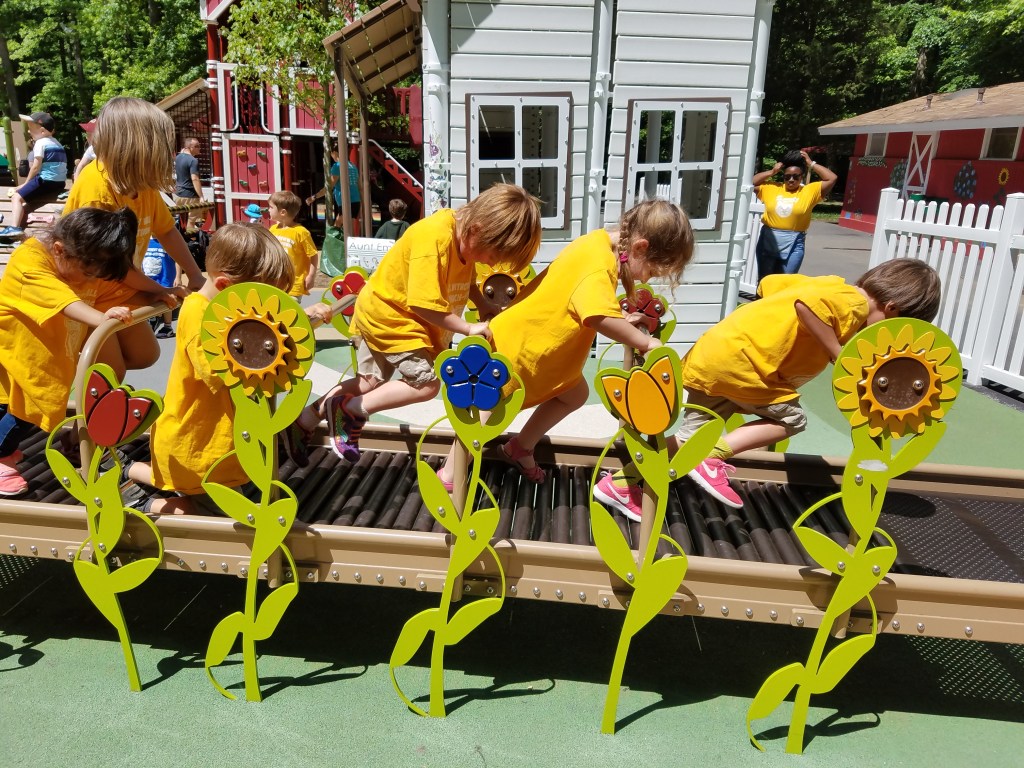
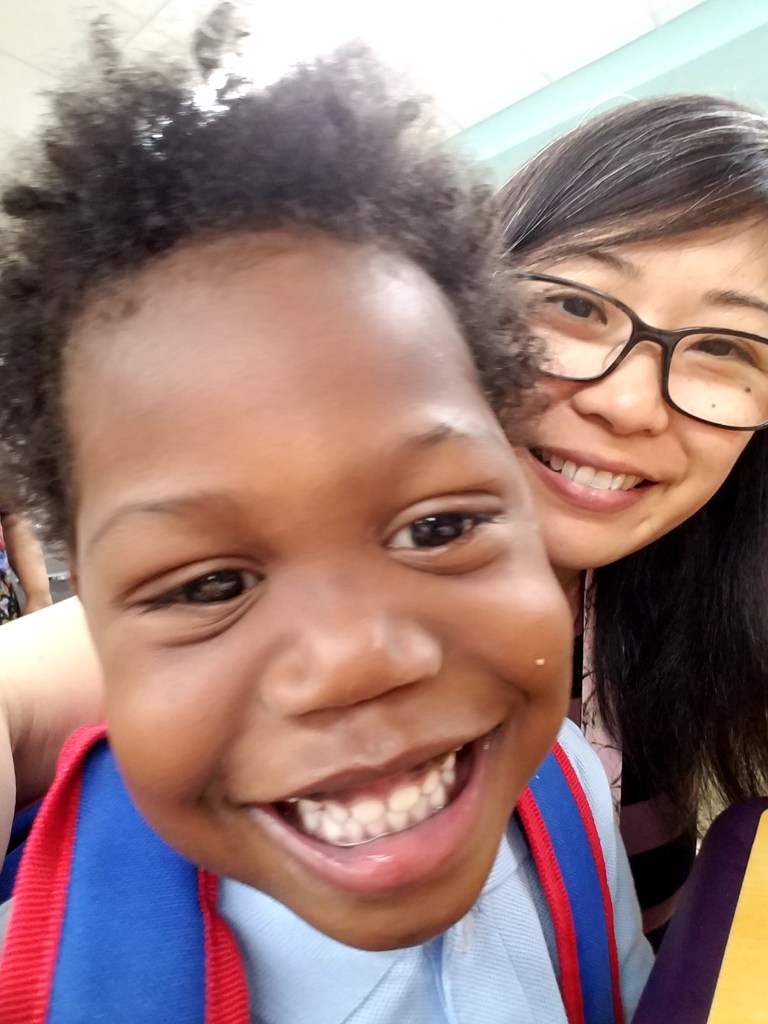
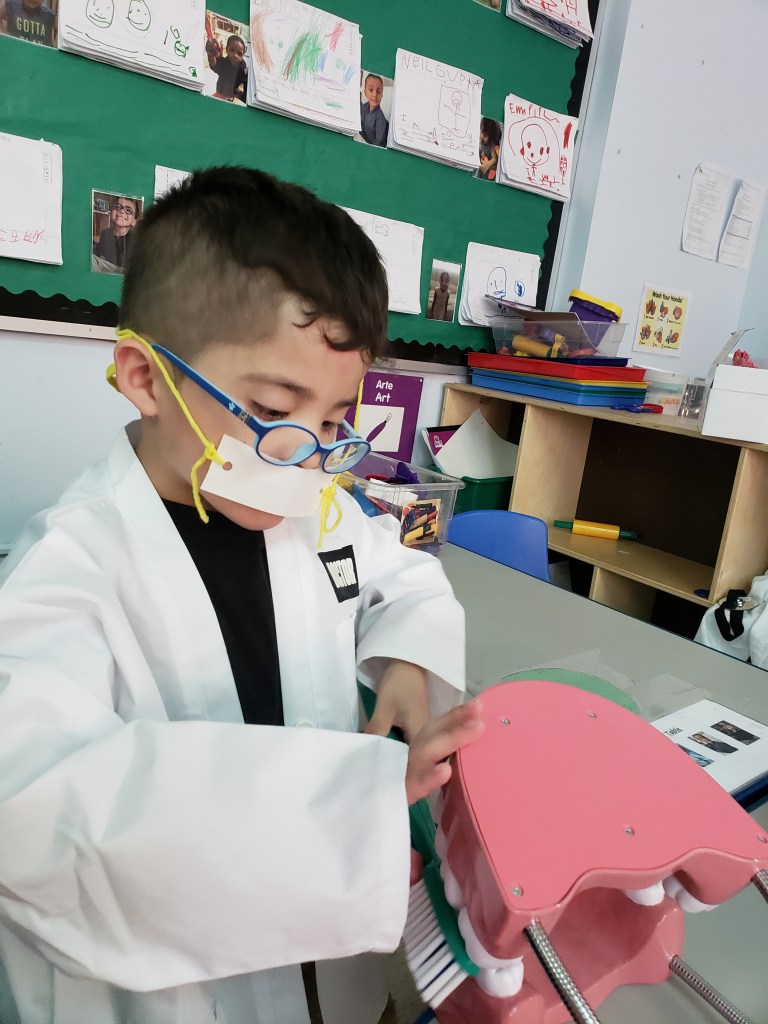
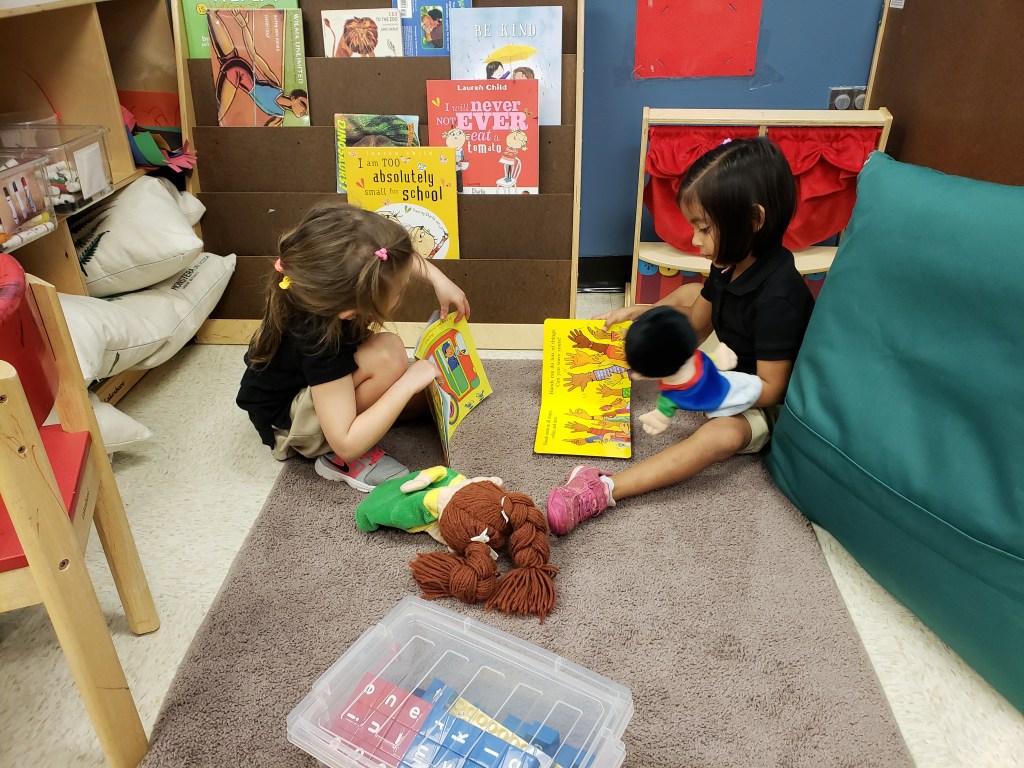


How long have you been teaching? This is my 21st year in Education. I started at the Smithsonian Early Enrichment Center and taught in various community settings in DC during my first ten years. I’m grateful to have had in every role imaginable—from Instructional Aide to Assistant Director—and learned the fundamentals of the whole-child approach and my own teaching philosophy during those times. In 2010, I came to DCPS as an ECE Instructional Specialist and worked at several schools throughout the city coaching ECE teachers and administrators on recommended practices. In 2016, I transitioned back to the classroom to work with children and families on a day-to-day basis at School Without Walls at Francis-Stevens. Teaching is really where my heart is, and it was like coming home. Though there will be plenty of “new” this year, I’m excited to start this new venture at Stevens ELC!
What do you love most about the ECE age group? Ultimately, Early Childhood (birth to age 8) is such an important time. The relationships and events that happen during Early Childhood literally lay the foundation for a person’s lifelong development and learning. It’s a privilege to be a part of that. On a day-to-day basis, I love children’s openness, curiosity, and honesty. They’ll be the first to express what’s on their minds, whether through words or actions. I definitely miss our classroom community and our hugs, too! I really look forward to when school buildings can reopen safely for everyone.
Can you share a little about your teaching philosophy? Children are inherently curious and want to learn, and so I view myself as a facilitator. It’s my job to offer opportunities and the environment, both physically and emotionally, where children feel safe, comfortable, and capable enough to investigate the world around them. Children also deserve to feel a sense of belonging for all the parts of themselves, so it’s my responsibility to acknowledge them and help children develop joy about themselves and empathy for others.
How can we make virtual learning successful? Relationships, understanding/flexibility, and a sense of “let’s try.” I say relationships because all learning happens in the context of relationships—family and child, teachers and child, child and child, and family and teachers.
I say understanding and flexibility because there is so much happening in our current times—COVID-19, racial injustice, and too many more to list. Our lives right now are wrought with stressors. We should remember that we’re humans first and treat each other with empathy, kindness, and dignity. We need each other. As educators, we should address what’s going on for individual families and children, and be flexible when we incorporate their needs into our expectations. That might mean help with navigating technology, more check-ins with a family, encouragement/ coaching to try an activity, or adjustments to lesson plans depending on the family’s needs. The same goes for us educators needing understanding and flexibility, too. We all should give a little kindness to ourselves and each other.
Finally, I say a sense of “let’s try” because it’s the first time we’re starting the school year and building relationships virtually in the midst of this important time of change. Even with the best laid plans and intentions, we all—educators, families, and children—are bound to make mistakes at some point. It’s from those mistakes, communicating with each other, and trying again that we learn what might work the next time.
What are some of your favorite children’s books? I’ve always loved children’s books, especially ones with diverse perspectives. I view them as love letters to children in the sense that they can infuse joy, affirmation, curiosity, and creativity through words and illustrations. As Rudine Sims Bishop wrote, books can be mirrors, windows, and/or sliding doors. Some of my favorites right now are The Rabbit Listened by Cori Doerrfeld, I Am Every Good Thing by Derrick Barnes, Remember Balloons by Jessie Oliveros, A Letter to My Teacher by Deborah Hopkinson, Let’s Talk about Race by Julius Lester, Julian is a Mermaid by Jessica Love, and How Do You Dance? by Thyra Heder. And the list goes on….
What was your favorite childhood book? The Amelia Bedelia series, Choose Your Own Adventure series, and Anne of Green Gables. Books for me were ways of finding connection to other worlds.
If you could have any super power what would it be and why? It sounds corny and simple, but I’d have the power to hug safely especially because we’ve been physically distancing since March. A hug can say so much without words—hello, I love you, I see you, I understand you, you’re not alone, let’s do this together, and so on….
 DCPS School Planning